Rosa Vogel · 23 September 2026
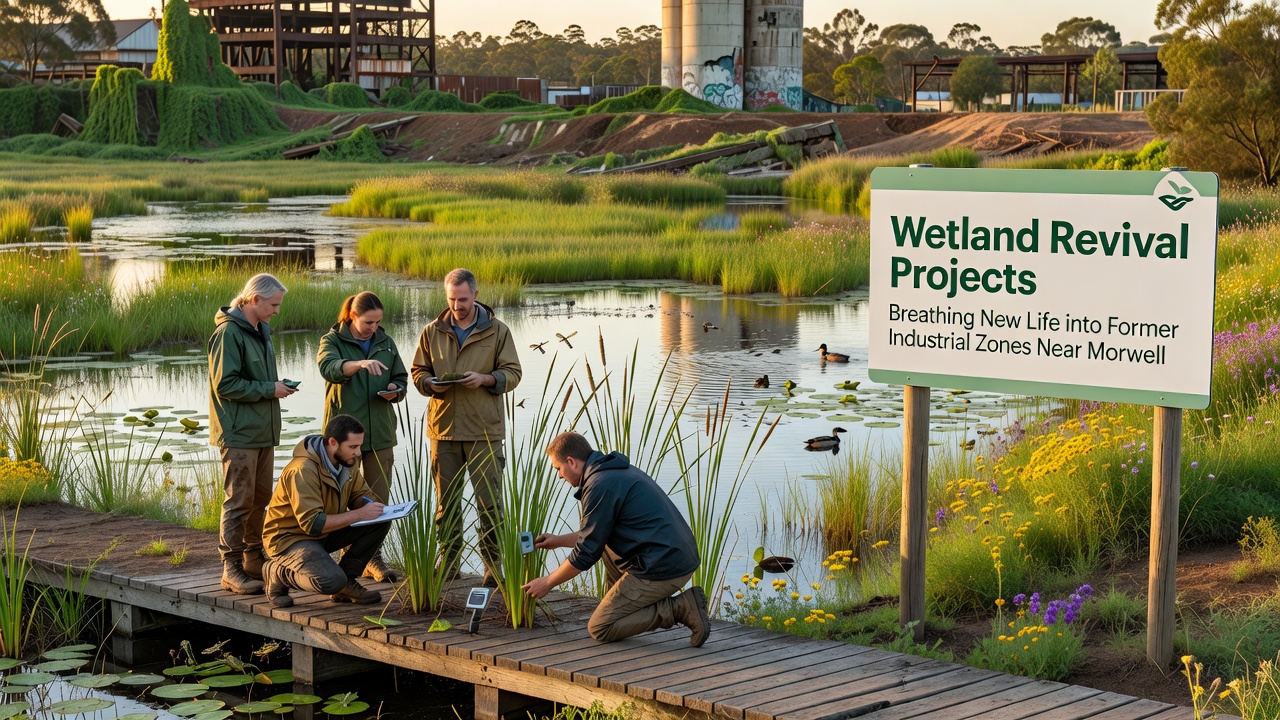
Wetland Revival Projects Breathing New Life into Former Industrial Zones Near Morwell
Former industrial sites around Morwell have undergone significant transformation through wetland revival initiatives that convert disused mining and power generation areas into functioning ecosystems, and these projects draw on decades of site assessment data from the Latrobe Valley region while addressing legacy contamination issues that date back to mid-twentieth century coal operations.
Background on Industrial Legacy and Site Conditions
Decades of brown coal extraction and associated energy production left behind open cuts, ash ponds, and compacted soils near Morwell, yet researchers from Victorian environmental agencies documented that certain low-lying zones retained hydrological potential once overburden materials were reshaped and drainage patterns restored, and studies conducted between 2018 and 2024 quantified heavy metal concentrations alongside acid sulfate risks that required targeted capping before vegetation establishment could proceed.
Local planning documents reveal that several parcels totaling over 1,200 hectares were identified as candidates for wetland conversion because their topography naturally collected runoff, while soil testing showed sufficient clay layers to support shallow water retention without extensive lining, and this combination of factors allowed project teams to prioritize native plantings over engineered infrastructure in many locations.
Restoration Techniques and Phased Implementation
Engineers and ecologists applied a sequence of earthworks that included recontouring spoil heaps to create varied water depths, installing sediment traps at inflow points, and introducing species such as Phragmites australis and Eleocharis sphacelata to stabilize banks, and monitoring reports from the first completed cell indicated rapid colonization by macroinvertebrates within eighteen months of inundation, which in turn supported returning bird populations including ibis and spoonbills.
Water quality sampling conducted quarterly demonstrates reductions in turbidity and nutrient loads as vegetation mats develop, whereas adjacent reference sites without intervention continue to show elevated conductivity from residual salts, and these measurable improvements align with benchmarks established by the Victorian Catchment Management Authority for functional wetland recovery.
Ecological Outcomes and Biodiversity Monitoring
Surveys completed in late 2025 recorded twenty-seven bird species utilizing the new wetlands during migration periods, compared with fewer than ten species noted in pre-project baseline counts, while amphibian call surveys documented breeding activity in three frog species that had been absent from the industrial footprint for at least thirty years, and camera trap data further confirmed regular visits by swamp wallabies and rakali along the fringing vegetation corridors.
Soil carbon measurements taken at one-meter intervals reveal gradual accumulation in the upper horizons as organic matter from plant litter builds, which researchers note contributes to long-term sequestration potential even as the sites continue to receive treated water from nearby urban drainage networks, and these findings appear in technical summaries prepared by the Department of Energy, Environment and Climate Action.
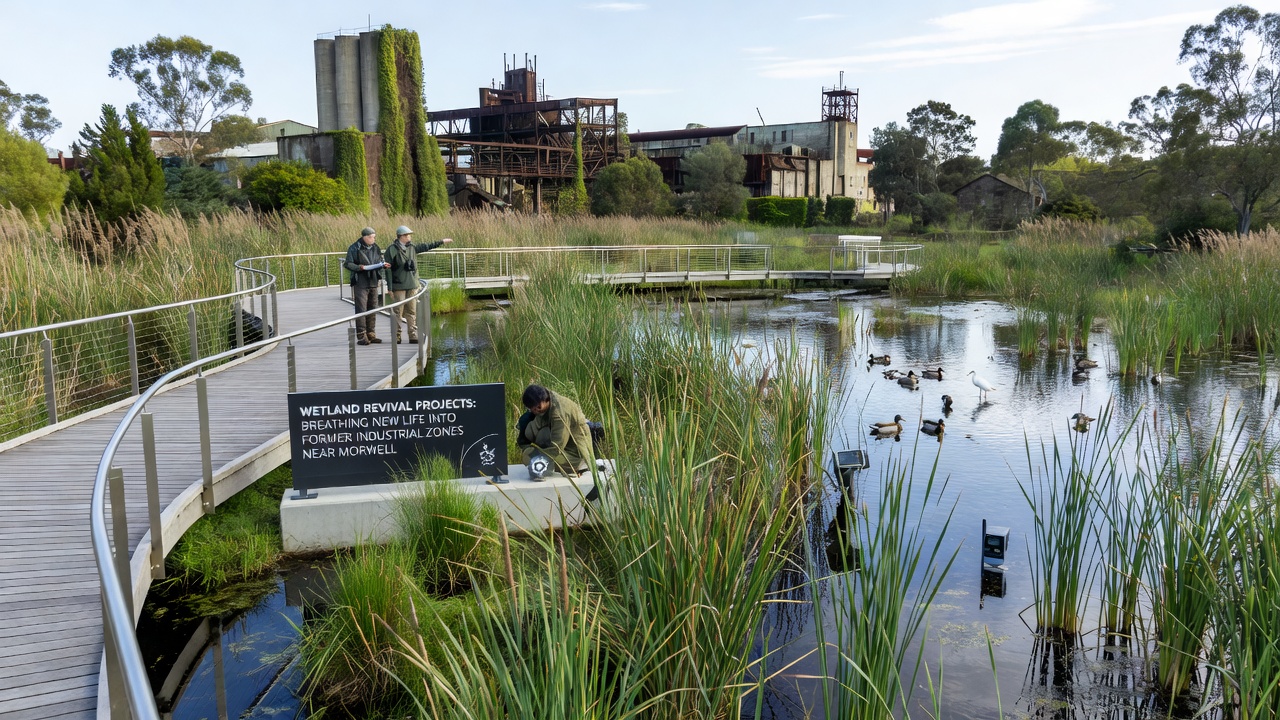
Community engagement programs have included guided site walks for local schools and citizen science training sessions that equip volunteers to record species sightings through standardized apps, and participation numbers reached 340 individuals across six events held during 2025, according to organizer logs maintained by the Latrobe Valley Environmental Education Centre.
September 2026 Milestones and Forward Planning
Project coordinators have scheduled a public progress review for September 2026 that will present updated hydrological modeling and three-year vegetation cover statistics, while a parallel workshop will examine options for connecting the restored wetlands to broader regional trail networks that already link several former power station sites, and funding applications submitted to the Australian Government’s Environmental Restoration Fund seek support for an additional 300 hectares of similar conversion work scheduled to commence in 2027.
Data from continuous water level loggers installed across the sites indicate that seasonal fluctuations remain within target ranges despite variable rainfall patterns observed since 2023, and these records feed into adaptive management protocols that allow operators to adjust inflow volumes or conduct targeted weed control when needed, according to operational guidelines issued by the West Gippsland Catchment Management Authority.
Conclusion
Long-term monitoring commitments extend through 2035, with annual reports required under the site rehabilitation approvals, and these documents will continue to track both ecological metrics and any maintenance requirements arising from climate variability or upstream land-use changes, while the accumulated evidence from Morwell-area projects contributes to a growing body of Australian case studies on post-industrial wetland creation that other regions reference when planning similar transitions.