Rosa Vogel · 9 September 2026
Tracing Brown Coal's Legacy Through the Lenses of Latrobe Valley's Evolving Workforce
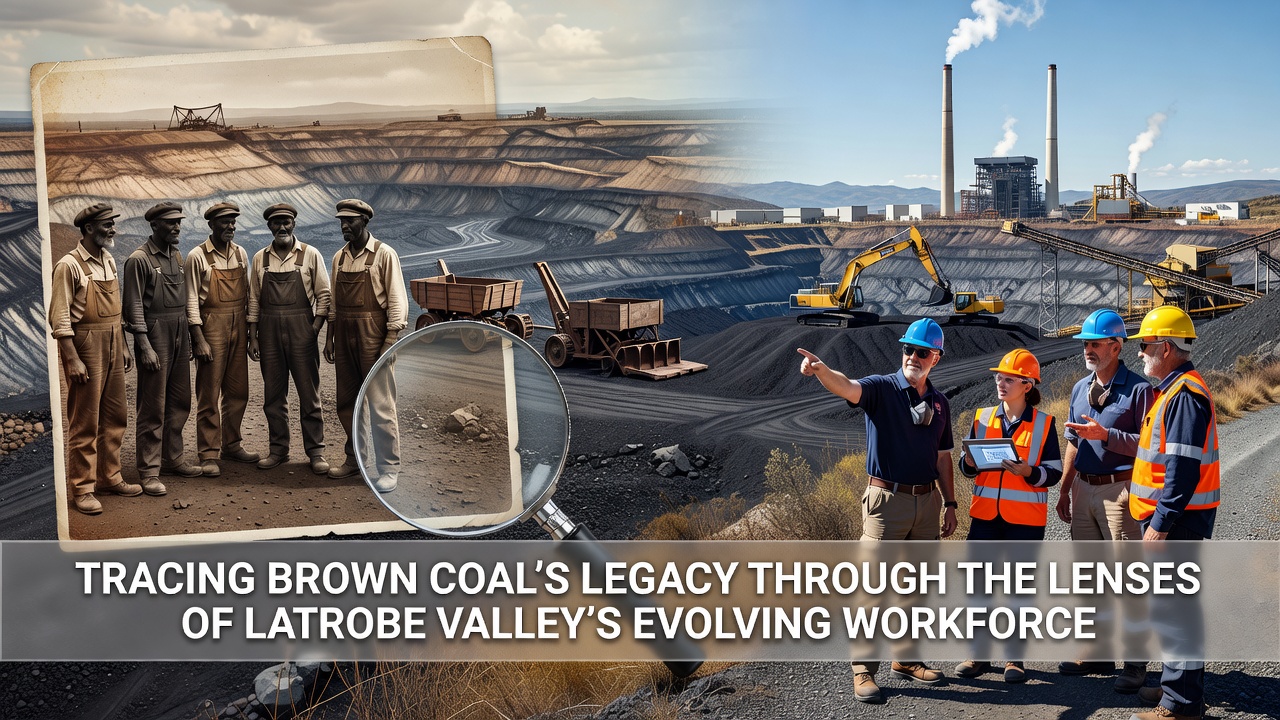
The Latrobe Valley in Victoria, Australia stands as one of the nation's primary sources of brown coal, where generations of workers have extracted lignite for electricity generation and the region's economic foundation has rested on mining and power operations since the early twentieth century. Employment patterns shifted dramatically when open-cut mines expanded after World War II, drawing thousands into roles that ranged from heavy equipment operation to plant maintenance and engineering support.
Data from the Australian Bureau of Statistics show that coal-related jobs peaked in the 1980s and 1990s, when multiple power stations operated at full capacity and the local labour force relied heavily on secure, unionised positions tied directly to the resource. Those positions offered stable incomes and structured career paths, yet they also exposed workers to dust, noise and long shifts that defined daily life in towns such as Morwell, Traralgon and Moe.
Early Industry Expansion and Workforce Composition
Initial development of the Yallourn and Morwell mines created demand for both skilled tradespeople and general labourers, while the construction of the Hazelwood and Loy Yang power stations in later decades added layers of technical specialists who monitored boilers, turbines and emissions systems. Training programs run by the State Electricity Commission of Victoria supplied many of these workers, establishing apprenticeships that fed directly into the plants and created multi-generational employment clusters within families.
By the 1970s the sector supported ancillary industries including transport, equipment repair and catering services that together sustained several thousand additional positions across the valley. Observers note that the workforce remained predominantly male and drawn from nearby communities, although increasing numbers of women entered administrative and laboratory roles as operations modernised.
Transition Pressures and Job Losses
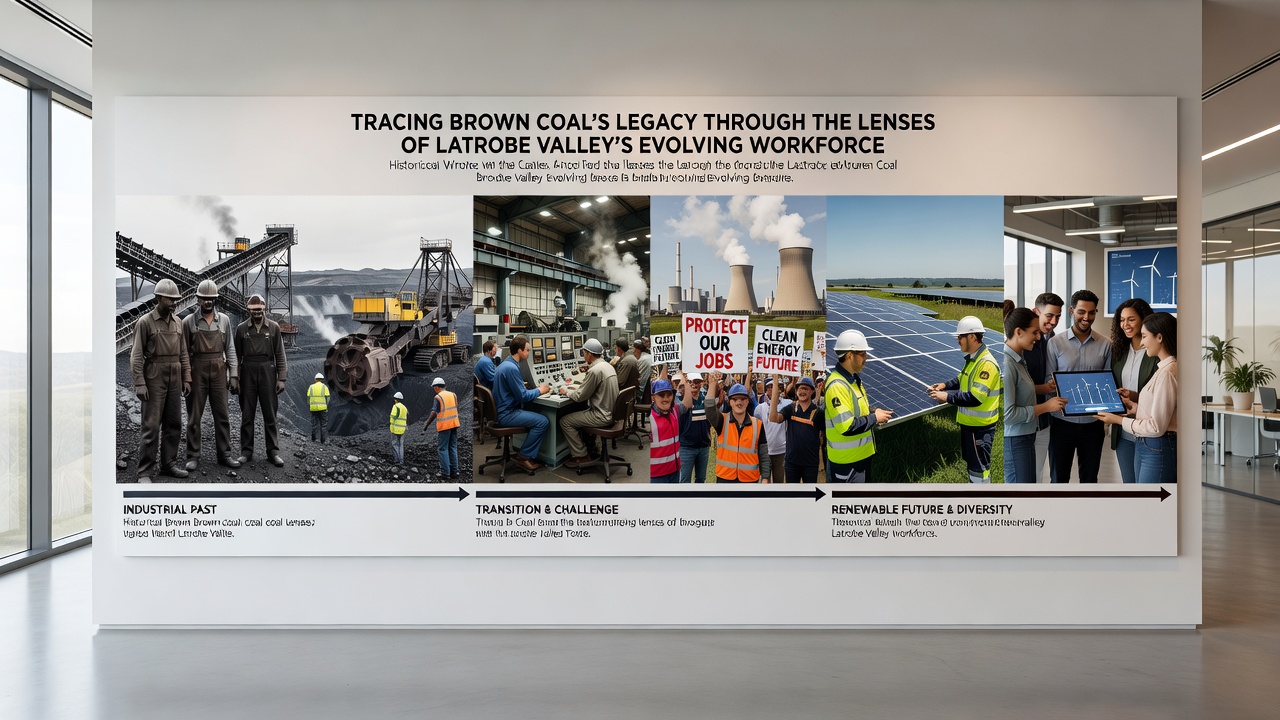
Plant closures began to reshape employment after Hazelwood shut in 2017, removing hundreds of direct roles and prompting contractors to scale back or relocate. The remaining stations at Yallourn and Loy Yang continued operations, yet scheduled retirements announced for the late 2020s accelerated planning for alternative economic activities. In September 2026 regional employment figures indicated that the share of the workforce still engaged in coal extraction and power generation had fallen below fifteen percent, down from more than thirty percent two decades earlier.
Many former miners and technicians moved into construction, logistics and maintenance work associated with new renewable projects, while others pursued further education through TAFE programs focused on solar installation, battery storage and land rehabilitation. Government-funded transition packages provided wage subsidies and relocation support, yet uptake varied according to age, skill level and family circumstances.
Skills Development and New Sector Growth
Regional development agencies have partnered with universities and vocational institutes to map existing competencies onto emerging industries, noting that mechanical and electrical trades acquired in coal plants transfer readily to wind turbine maintenance and grid-scale battery projects. Data released by the Victorian Department of Jobs, Precincts and Regions show steady growth in clean-energy employment since 2022, with solar farm construction and native vegetation restoration now accounting for several hundred positions that did not exist in the valley ten years ago.
Land rehabilitation efforts on former mine sites have created demand for environmental scientists, heavy machinery operators and project managers who coordinate erosion control and biodiversity monitoring. These roles often require updated certifications, prompting many experienced coal workers to complete short courses that bridge traditional mining knowledge with contemporary environmental standards.
Comparative International Approaches
Similar workforce shifts have occurred in other lignite regions, including parts of Germany where the Energiewende policy framework supported retraining initiatives and early retirement schemes for older miners. Reports from the European Commission's Just Transition Platform document how structural funds helped diversify local economies toward logistics, tourism and advanced manufacturing once coal production declined. Australian planners have examined these models when designing support packages for the Latrobe Valley, adapting elements such as community consultation processes and targeted infrastructure investment.
Canadian examples from the province of Alberta illustrate how royalty-funded diversification grants can accelerate small-business formation in former coal towns, although outcomes depend on proximity to larger markets and transport links. Observers tracking the Latrobe Valley note that geographic isolation continues to limit some service-sector opportunities, directing attention instead toward industrial-scale renewable projects and advanced manufacturing that can utilise existing high-voltage transmission infrastructure.
Current Employment Landscape and Future Projections
By mid-2026 the valley hosted multiple solar and battery installations under construction, alongside ongoing work at Loy Yang that maintained a reduced but still significant core workforce. Service industries including health care, education and retail expanded to meet the needs of a population that remains stable even as its occupational profile changes. Census data indicate rising numbers of residents employed in professional and scientific services, reflecting both in-migration of younger workers and upskilling among long-term residents.
Projections prepared by the Commonwealth Scientific and Industrial Research Organisation suggest that renewable energy and land-management sectors could support several thousand additional jobs by 2035, provided transmission upgrades and workforce training continue at current rates. Challenges remain around housing availability for incoming tradespeople and coordination between multiple levels of government on project approvals.
Conclusion
The legacy of brown coal in the Latrobe Valley continues to influence employment patterns, yet the workforce has demonstrated adaptability through successive phases of industrial change. Skills developed over decades of mining and power generation now feed into new activities that range from renewable infrastructure to environmental restoration. Regional statistics compiled through 2026 confirm that diversification is underway, supported by coordinated training programs and infrastructure investment drawn from both state and federal sources. Ongoing monitoring of labour-market data will determine how successfully the valley translates its industrial heritage into sustained economic participation for current and future generations.